
Orange peel, knockdown, hand trowel - most homes in the U.S. have some kind of wall texture, and it's the first thing we check before we quote a wallpaper job. Here's when you can install over it, when you shouldn't, and what smoothing a wall actually takes.
Over very light orange peel, sometimes. Over anything heavier, no. Wallpaper is thin - it doesn't hide texture, it outlines it, especially when light hits the wall from the side.
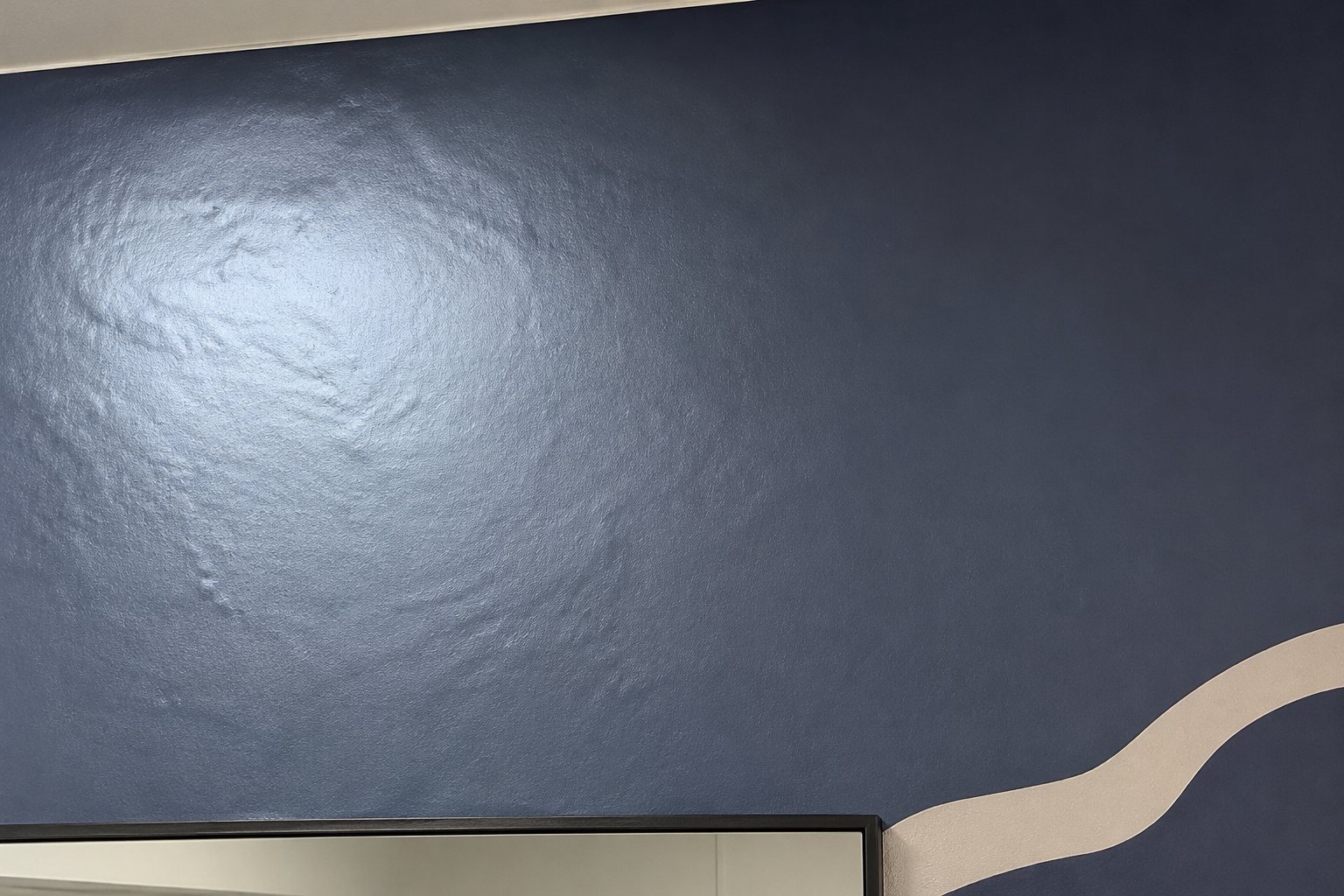
A dark mural hung over hand-trowel texture. Under one light, every ridge shows.
Wallpaper follows the surface under it. Every bump casts a small shadow, and when light hits the wall at a low angle - from a window beside it, a sconce, or a recessed light close to the wall - those shadows spread across the whole surface. Installers call it raking light. It's why a wall that looks almost smooth when painted can look bumpy once it's papered.
Paint gets away with texture because texture is part of the painted look. Wallpaper is meant to read as one flat, continuous surface, so every bump looks like a flaw. On smooth, shiny or solid-color papers it's the first thing you notice.
The second problem shows up later. Over texture the paper only touches the high points. Less contact means seams and edges are more likely to lift over time, especially in bathrooms and other humid rooms. Peel-and-stick is the worst case - it simply won't stay on a textured wall.
Here's how we look at the ones we see most often, from lightest to heaviest.
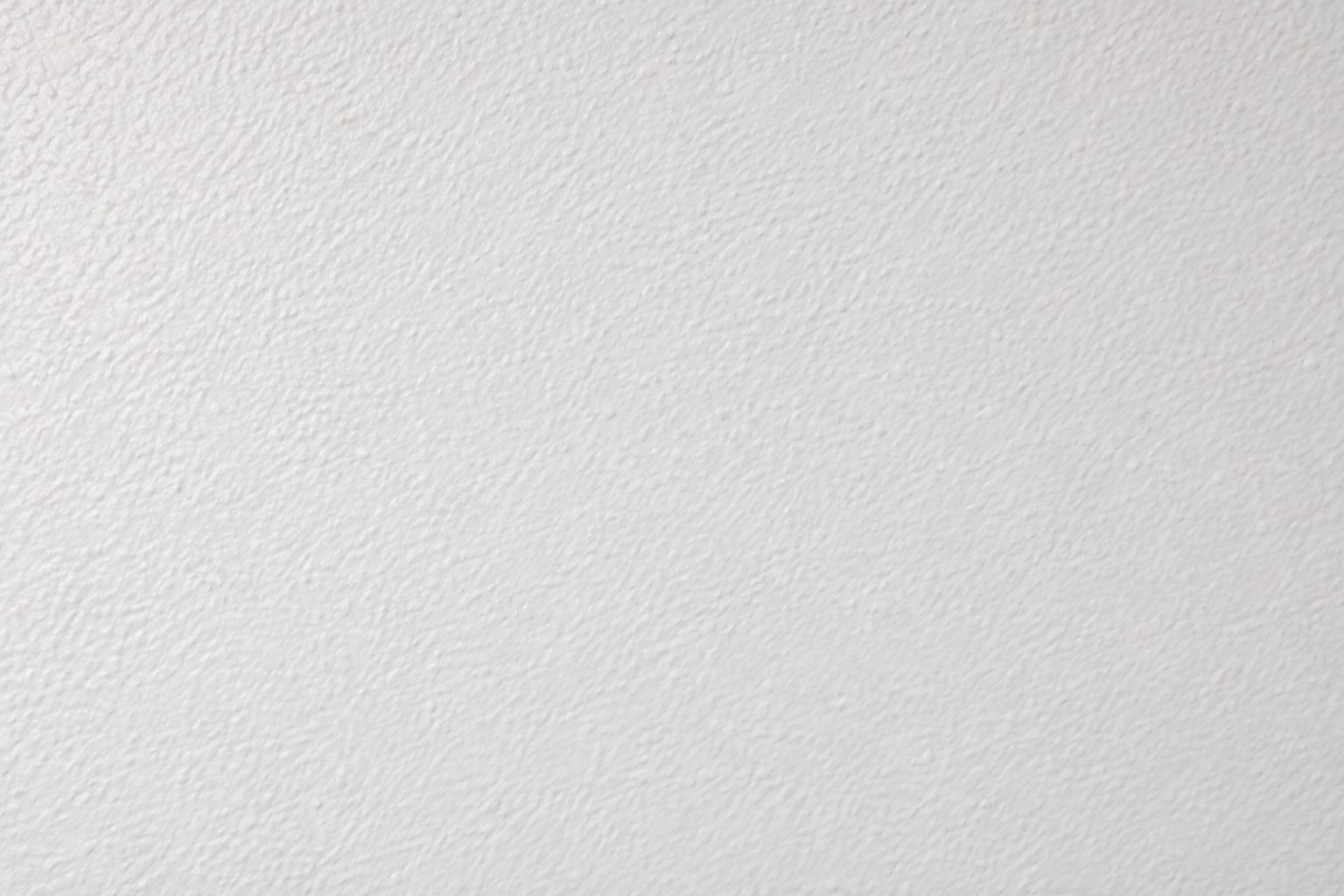
A fine spatter that looks like the skin of an orange. You can see it, but you can barely feel it.
Our call: can go as-is with the right paper.
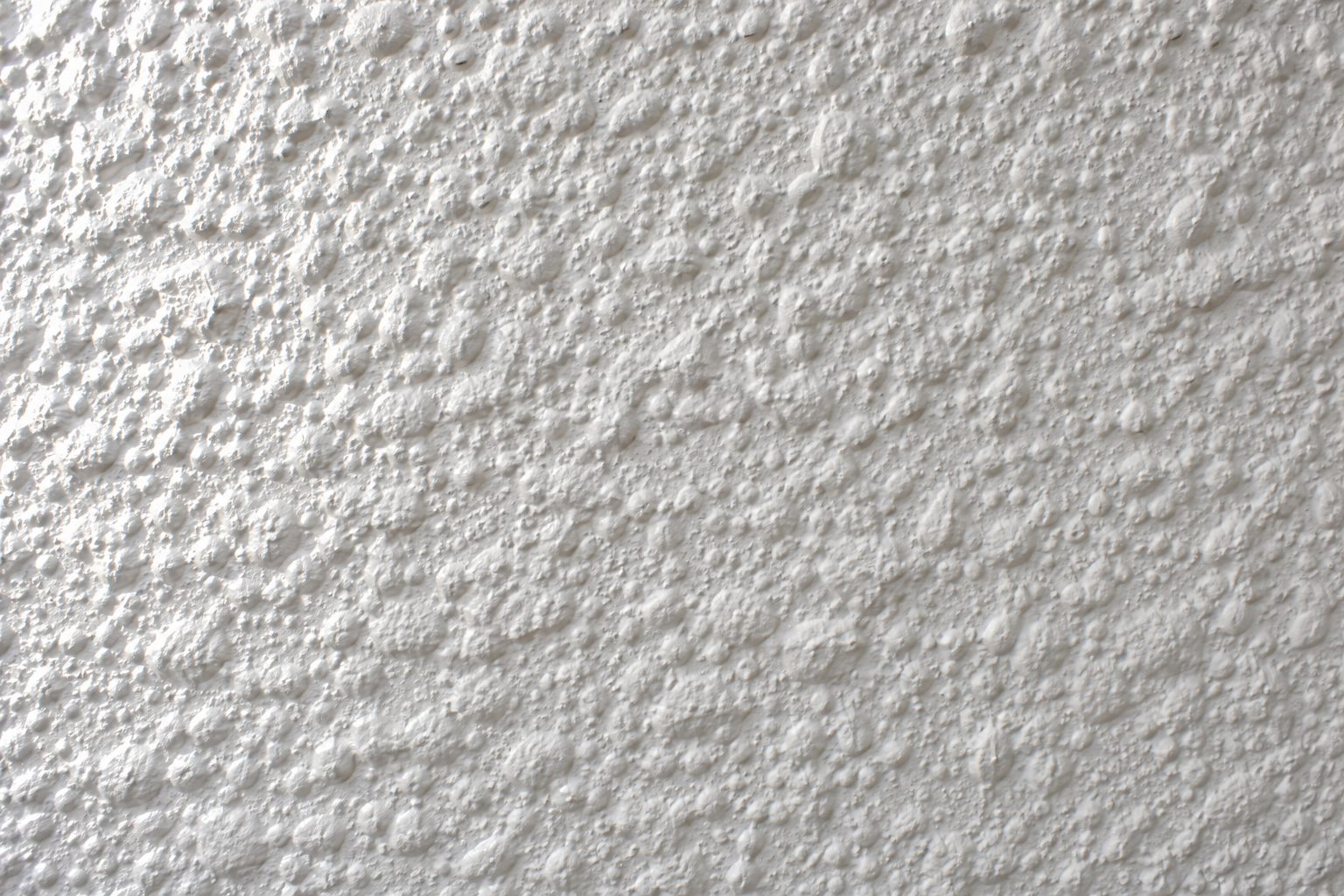
Bigger, denser bumps you can feel with your palm. Shows through almost any wallpaper.
Our call: skim coat.
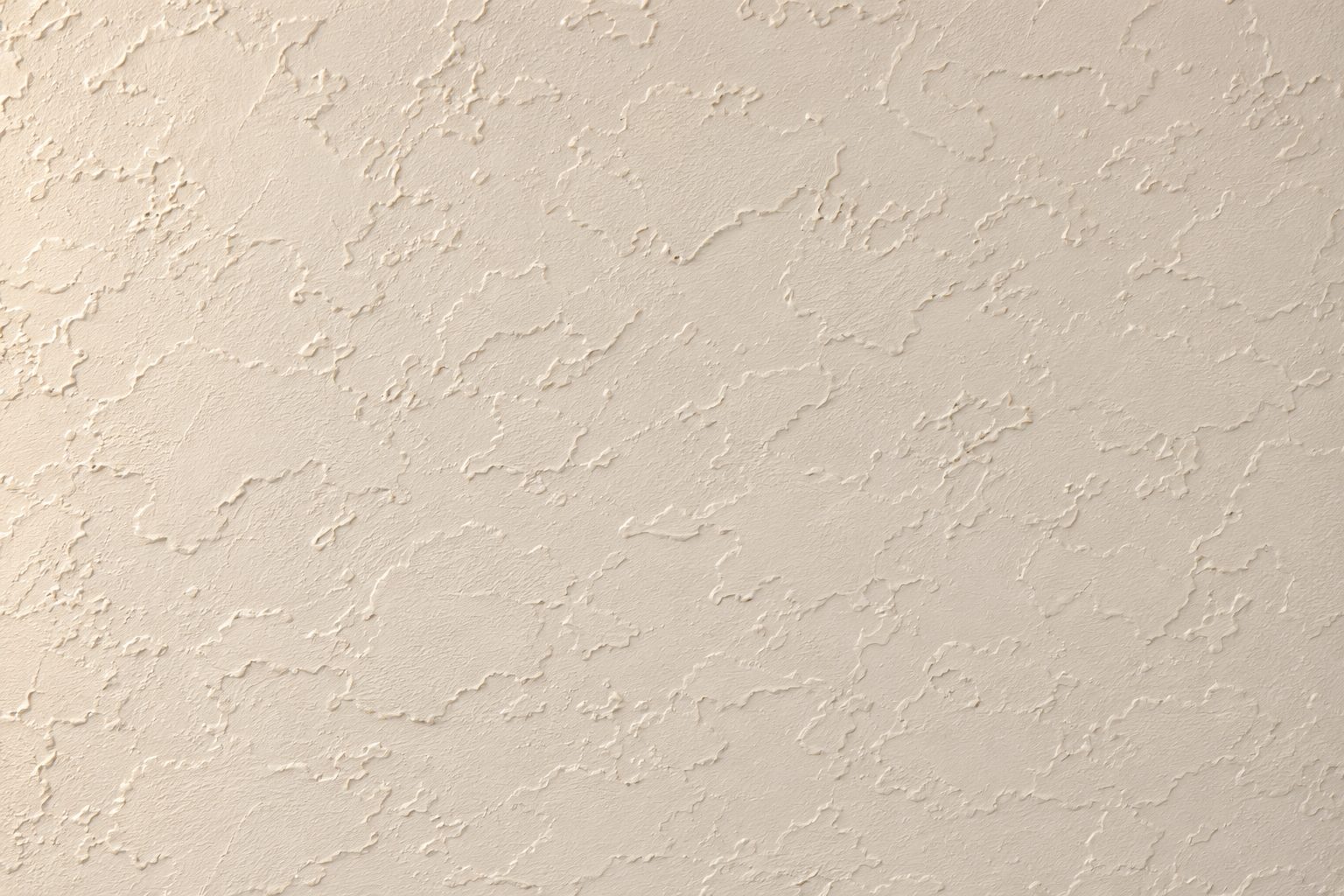
Spatter flattened with a knife, leaving flat-topped islands. The edge of every island shows through wallpaper as an outline.
Our call: skim coat.
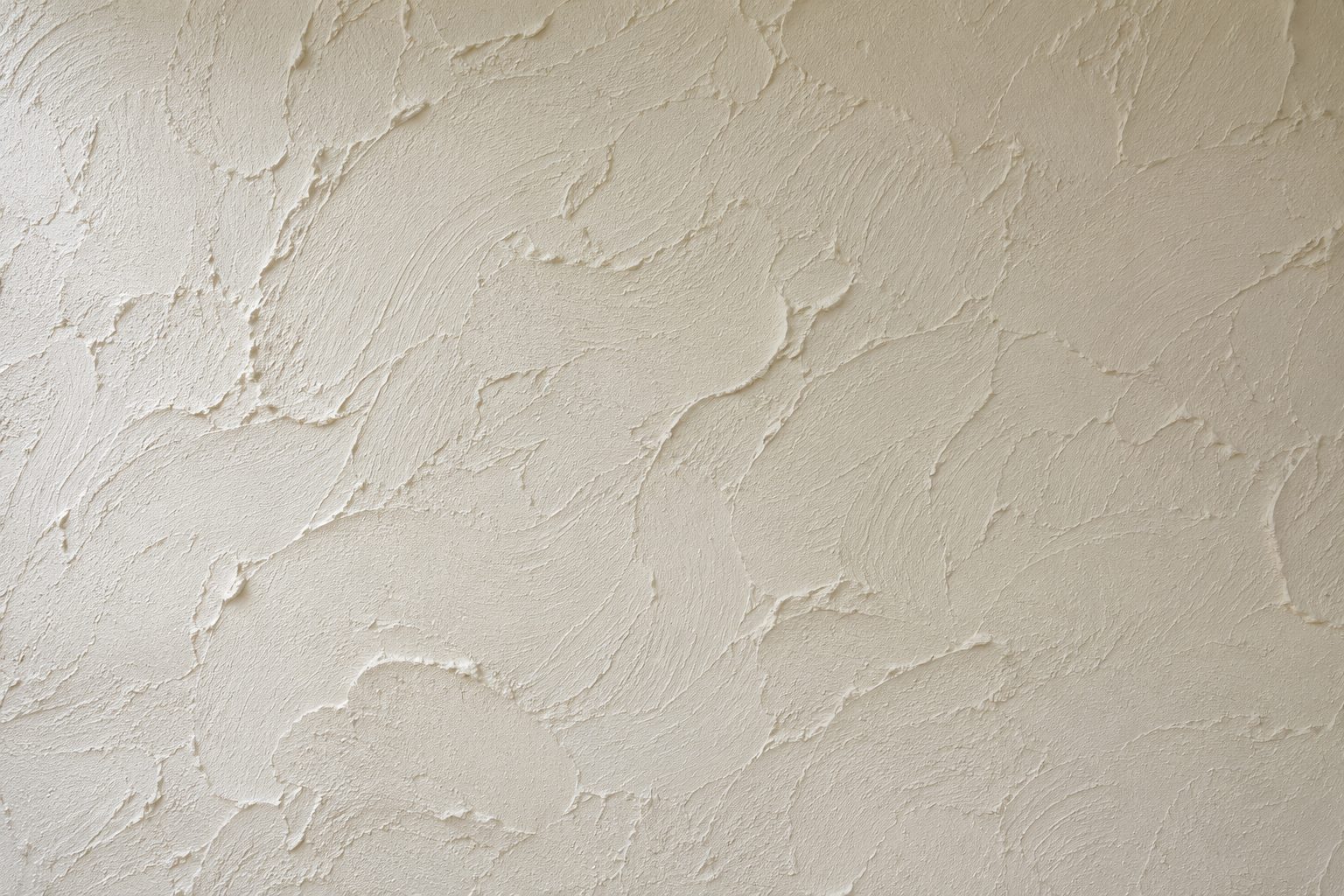
Thick swirls and ridges of compound applied with a trowel. Very common in Colorado and across the Southwest. It's the heaviest wall prep we do, so it's worth knowing about before you order wallpaper.
Our call: skim coat, usually two to three coats.
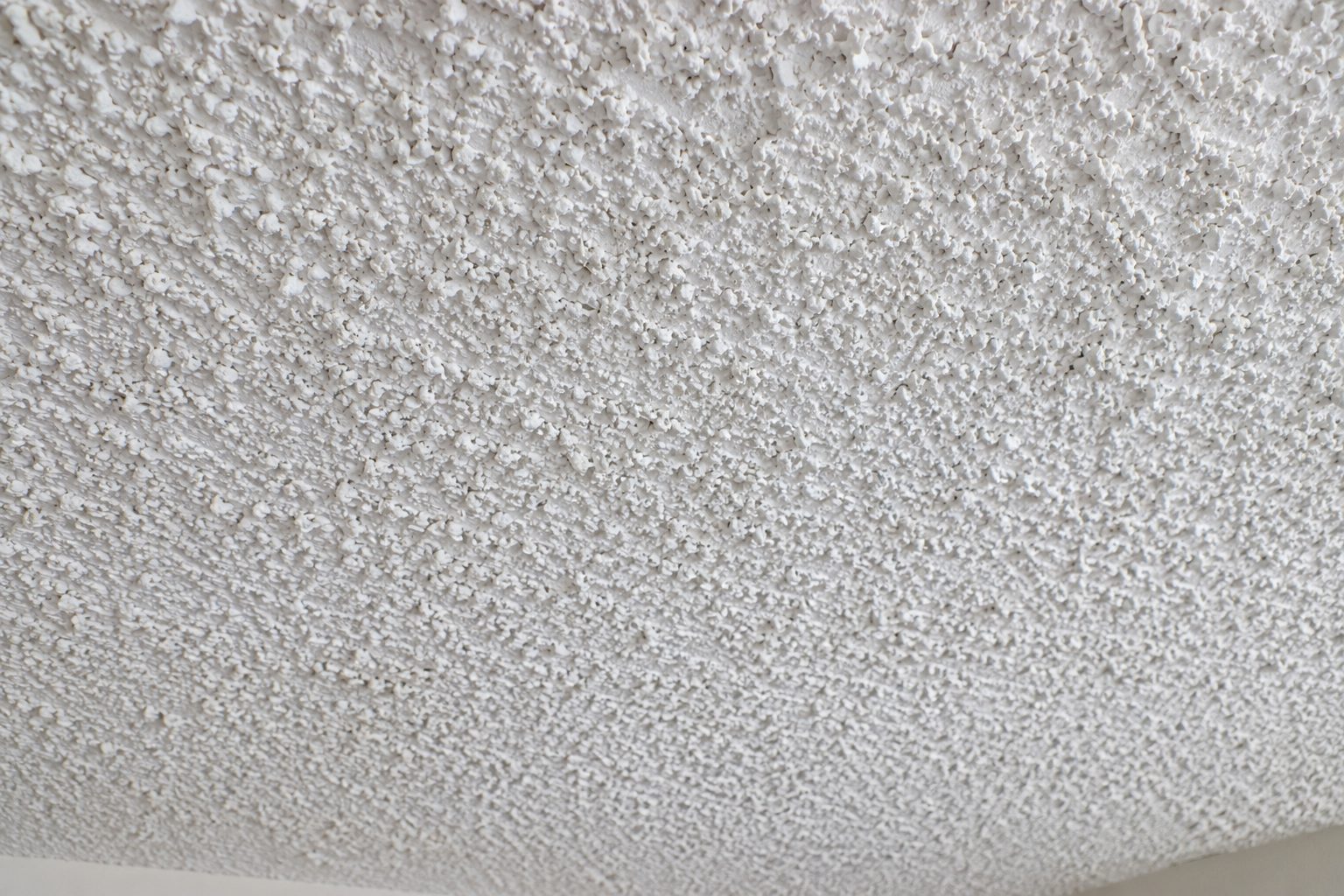
Has to come off before a ceiling can be papered. In homes built before the mid-1980s it can contain asbestos, so have it tested before anyone scrapes it.
Our call: test, remove, then smooth.

What wallpaper manufacturers ask for. Smooth walls still get patched, sanded and primed, but they don't need a skim coat.
Our call: patch, prime, install.
Skipping wall smoothing can take roughly 30-40% off a wallcovering project. That's real money. But think about what's already on the table: the wallpaper itself (designer papers often cost more than the install), a professional installer, and the evenings you spent choosing the pattern. Prep is the one place where saving can make everything else look cheap.
Sometimes it's still the right call. Just make it with the trade-off in front of you.
| Install over texture | Skim coat first | |
|---|---|---|
| Finish | Bumps show in side light | Flat, the way the paper is designed to look |
| Adhesion | Paper touches only the high points; seams and edges can lift over time | Full contact with the wall |
| Seams | Harder to close tight across bumps | Close tight and stay flat |
| Removal later | Messier; the wall surface can tear | Much easier over a wallcovering primer |
| Cost | Roughly 30-40% less | Higher |
| Schedule | Faster | Adds drying time, usually at least a day |
| Dust | Very little | Sanding dust - we cover the room and clean up |
If your texture really is light, installing as-is can be a reasonable choice. It tends to work out when several of the things on the left are true - and none on the right.
A blank lining paper hung under the finish paper can bridge light texture and give it an even base. On light orange peel it's usually less work than a full skim coat. It won't fix knockdown or trowel texture - those bumps come through both layers. Many grasscloths and silks are specified over a liner anyway; we'll tell you if yours is one of them.
It isn't a coat of paint. This is what our crew does on a typical textured wall before the first strip of wallpaper goes up.
Floors and furniture covered, cover plates off, outlets taped. Sanding makes fine dust, so this comes first.
Ridges and peaks are scraped and sanded so the coats that follow can stay thin.
Glossy paint, loose paint and torn drywall paper get a sealer, so the compound bonds instead of bubbling.
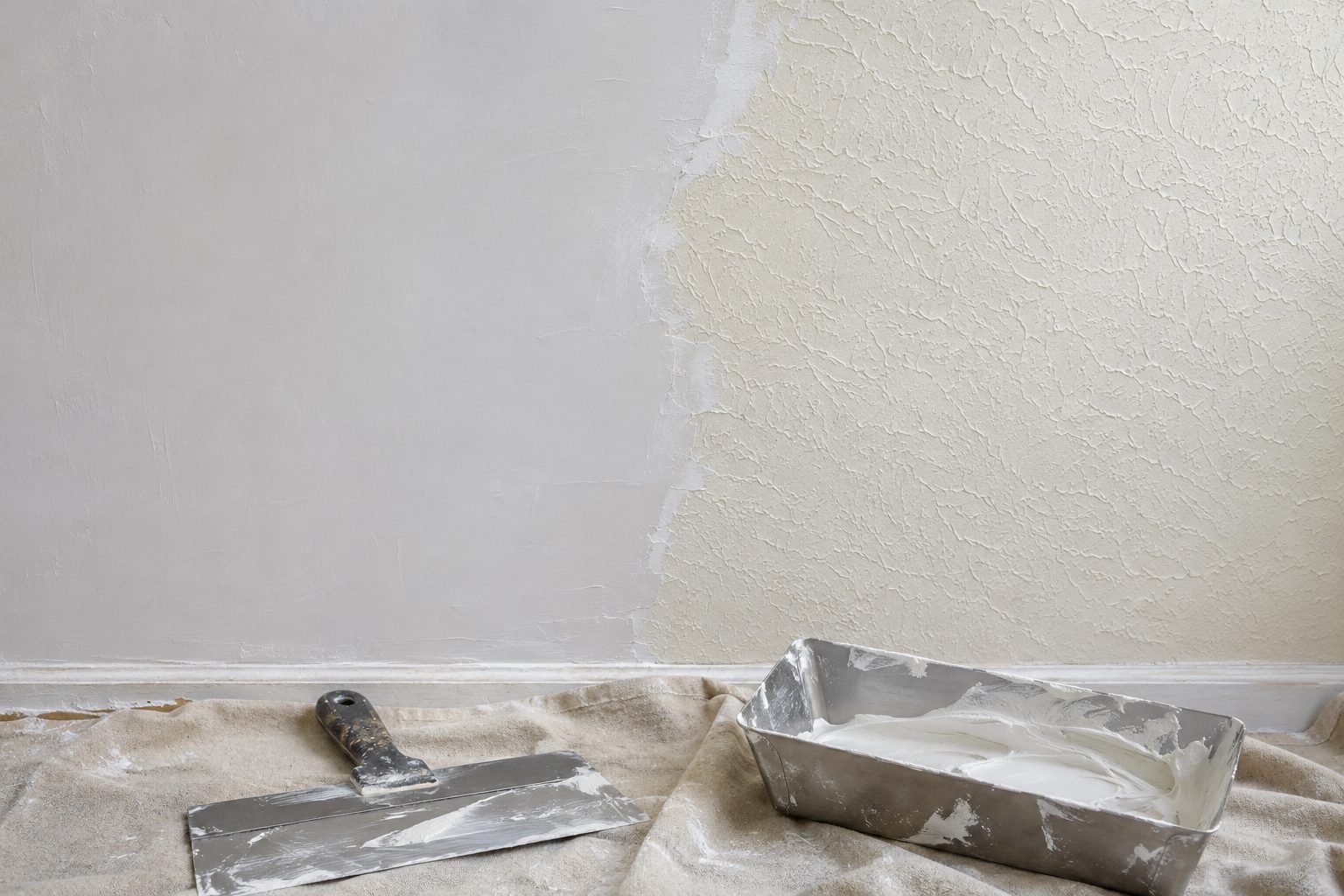
A thin coat of joint compound over the whole wall with a wide knife or trowel, filling the low spots. Heavy trowel textures often get a setting-type compound for this first pass.
Each coat dries completely before it's sanded. Light texture usually takes two coats, hand trowel often three. We check every wall with a work light held at a low angle - the same raking light that would show flaws under the paper.
The wall is vacuumed and wiped down. Dust left on the surface weakens everything that goes on top of it.
Fresh compound is porous and soaks up paste. A wallcovering primer seals it, gives the paste something to grab, and lets the paper come off later without damaging the wall.
Only now does the wallpaper go up - on a wall that won't fight it.
Because each coat has to dry, smoothing usually adds at least a day to the job, and more for heavy trowel texture, high humidity or cold weather. Drying time is in your quote, so the schedule is clear up front.
Turn off the room lights. Hold your phone's flashlight flat against the wall and point it along the surface, not at it. The shadows you see are roughly what will show through a smooth wallpaper.
Then run your palm across the wall. If you can clearly feel the texture, plan on smoothing it.
No. Primer and paint follow the texture just like wallpaper does. Only joint compound fills the low spots.
Thick and textured papers soften light orange peel. No wallpaper hides knockdown or trowel texture.
Yes. A single feature wall is the most common case we see.
Usually not - we smooth over it. Scraping texture off drywall is messier and tends to damage the drywall face.
After, if you can. The wall can change which paper makes sense and how the job is priced.
Send us two photos: one of the whole wall, and a close-up with a flashlight held to the side. We'll tell you whether it can go as-is or needs prep - before you order wallpaper.
Send photos for a quote


